
In today’s fast-paced world, anxiety and stress have become unwelcome companions for many. As people increasingly seek natural alternatives to conventional medications, Shilajit—an ancient resinous substance from mountainous regions—has emerged as a promising option. This powerful adaptogen has been used for centuries in traditional Ayurvedic medicine and is now gaining recognition for its potential to help manage anxiety and stress naturally. But does science support these claims? Let’s explore how Shilajit for anxiety and stress management works, what evidence exists, and how you might incorporate it into your wellness routine.
What Is Shilajit?
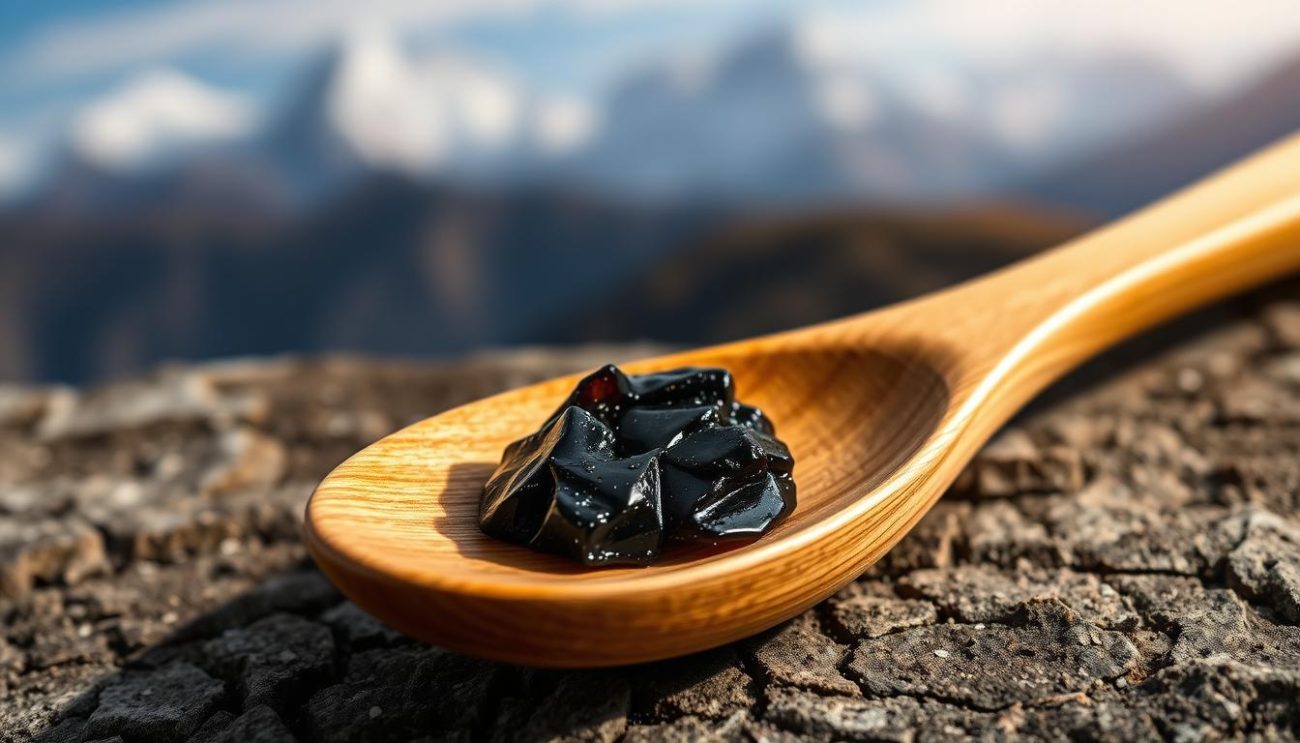
Pure Himalayan Shilajit in its natural resin form
Shilajit (pronounced shil-ah-jeet) is a blackish-brown resinous substance that oozes from rocks in mountainous regions, primarily the Himalayas, Altai, Caucasus, and other mountain ranges. It forms over centuries through the decomposition of plant matter and minerals, creating a complex substance rich in fulvic acid, dibenzo-α-pyrones, humic acid, and over 84 minerals in their ionic form.
Often called “the destroyer of weakness” in Sanskrit, Shilajit has been a cornerstone of Ayurvedic medicine for thousands of years. Traditional practitioners have used it as a rejuvenator and adaptogen—substances that help the body resist various stressors. While historically used for everything from longevity to enhanced vitality, modern interest has focused on its potential benefits for specific conditions, including anxiety and stress management.
The unique composition of Shilajit makes it particularly valuable. The fulvic acid content helps transport nutrients at a cellular level, while its mineral profile supports numerous bodily functions. This natural substance comes in several forms—from its raw resin state to processed powders and capsules—making it accessible for contemporary use.
Benefits of Shilajit for Anxiety and Stress
The potential of Shilajit for anxiety and stress relief stems from its unique biochemical composition and how these compounds interact with our body’s stress response systems. Let’s examine the key bioactive compounds and mechanisms that make Shilajit effective for mental wellbeing.
Key Bioactive Compounds
Fulvic Acid
As the primary active component in Shilajit, fulvic acid plays a crucial role in its anti-anxiety effects. Research published in the Journal of Ethnopharmacology suggests that fulvic acid helps regulate neurotransmitter activity and has potent antioxidant properties that protect brain cells from oxidative stress—a key factor in anxiety disorders.
Dibenzo-α-pyrones
These compounds have been shown to support mitochondrial function, enhancing cellular energy production. Better energy metabolism in brain cells may improve cognitive function and resilience to stress. A 2012 study in the International Journal of Alzheimer’s Disease highlighted how these compounds might protect neural tissues.
How Shilajit Works Against Anxiety and Stress
Scientific Evidence
While traditional use provides a foundation for Shilajit’s applications, modern research is beginning to validate these claims:
A 2018 study published in the Journal of Medicinal Food found that Shilajit supplementation significantly reduced stress markers and improved cognitive performance in chronically stressed subjects over an 8-week period.
Another notable study in Pharmacognosy Research demonstrated that Shilajit extract exhibited anxiolytic (anxiety-reducing) effects comparable to standard anti-anxiety medications in animal models, but without the sedative side effects.
Research in the Ayu Journal showed that participants taking Shilajit reported a 28% reduction in perceived stress levels after 30 days, compared to just 9% in the placebo group.
Shilajit vs. Other Supplements for Anxiety and Stress
When considering natural approaches to anxiety and stress management, it’s helpful to understand how Shilajit compares to other popular supplements.
| Supplement | Efficacy for Anxiety | Onset Time | Safety Profile | Cost (Monthly) | Key Benefits |
| Shilajit | Moderate to High | 2-3 weeks | Generally safe with few reported side effects | $30-60 | Adaptogenic, energy-enhancing, mineral-rich |
| Ashwagandha | High | 1-2 weeks | Well-tolerated, may affect thyroid function | $15-40 | Strong cortisol reduction, improves sleep |
| Magnesium | Moderate | 1-2 weeks | Very safe, excess causes digestive issues | $10-25 | Muscle relaxation, improves sleep quality |
| L-Theanine | Moderate | 30-60 minutes | Extremely safe, minimal side effects | $15-30 | Fast-acting, promotes alert calmness |
Synergistic Combinations
Many users report enhanced benefits when combining Shilajit with other supplements. Particularly effective combinations include:
How to Use Shilajit for Anxiety and Stress
Dissolving Shilajit resin in warm water – a common method of consumption
Recommended Dosage
Finding the right dosage of Shilajit for anxiety and stress management is important for optimal results. Here are evidence-based guidelines:
Safety Note: Always start with the lowest effective dose and gradually increase as needed. Individual responses vary, and it’s essential to monitor how your body reacts.
Best Forms of Shilajit
Resin
The most traditional and potent form. Pure Shilajit resin is a sticky, tar-like substance that can be dissolved in warm water or milk.
Pros: Highest potency, most traditional form
Cons: Strong taste, requires preparation, harder to dose precisely
Powder
Processed form that’s easier to measure and consume. Often mixed with carriers for better stability.
Pros: Easier to measure, more convenient than resin
Cons: May have reduced potency compared to resin
Capsules
Pre-measured doses in convenient capsule form, ideal for those who dislike the taste or need consistent dosing.
Pros: Most convenient, precise dosing, no taste
Cons: May contain fillers, potentially lower bioavailability
Experience Premium Quality Shilajit
Our Shilajitcore+ features a patented Neuroresin Formula with AdvaGnced Bio-Optimized Cellular Vitality Formula, specifically designed to target anxiety and stress while boosting overall vitality.
Optimal Timing
Morning Use
Taking Shilajit in the morning can provide sustained energy throughout the day while helping manage stress responses. This timing works well for those who experience anxiety during daytime activities or work-related stress.
Evening Use
Some users prefer taking Shilajit in the evening, especially when using it to improve sleep quality affected by anxiety. However, its energizing effects may interfere with sleep for sensitive individuals.
Preparation Methods
User Experiences with Shilajit for Anxiety
While scientific research provides valuable insights, personal experiences can offer practical perspectives on how Shilajit works for anxiety and stress in real-world settings.
“After three weeks of taking Shilajit, I noticed a significant difference in how I handled work pressure. My mind feels clearer, and I don’t get that overwhelming anxiety before big meetings anymore. It’s subtle but definitely noticeable.”
Michael, 34, Software Developer
“I’ve tried many supplements for my anxiety, but Shilajit has been the most consistent. What I appreciate most is that it doesn’t make me drowsy like some other supplements. I feel energized yet calm, which is exactly what I needed.”
Sarah, 41, Fitness Instructor
“The combination of Shilajit and meditation has transformed my stress management. I’ve been taking it for about two months now, and my sleep has improved dramatically. I wake up feeling refreshed instead of anxious about the day ahead.”
David, 52, Business Executive
Note: Individual experiences with supplements vary. These testimonials represent personal experiences and should not be taken as guaranteed results. Always consult with a healthcare provider before starting any new supplement regimen.
Quality and Safety Considerations
When using Shilajit for anxiety and stress, quality and safety should be top priorities. Not all Shilajit products are created equal, and contamination can be a concern with natural products.
Choosing Quality Shilajit
Potential Side Effects
While Shilajit is generally well-tolerated, some users may experience:
Possible Side Effects
- Mild digestive discomfort
- Headache (typically during initial use)
- Changes in heart rate (rare)
- Allergic reactions (rare)
- Dizziness
Who Should Avoid Shilajit
Shilajit may not be suitable for everyone. Consult with a healthcare provider before use if you:
- Are pregnant or breastfeeding
- Have a history of heart conditions or hypertension
- Have diabetes or blood sugar regulation issues
- Have hemochromatosis (iron overload disorder)
- Are taking medications for anxiety, depression, or other mental health conditions
- Have kidney or liver disease
Frequently Asked Questions
Is Shilajit safe for long-term use?
Traditional Ayurvedic medicine has used Shilajit for centuries with few reported adverse effects. Modern research suggests it’s generally safe for long-term use when taken at recommended dosages. However, as with any supplement, it’s advisable to take periodic breaks (e.g., 5 days on, 2 days off, or 3 weeks on, 1 week off) to prevent tolerance and allow your body to maintain its natural regulatory processes. Always consult with a healthcare provider for personalized advice on long-term use.
Can Shilajit interact with antidepressants or anti-anxiety medications?
Yes, potential interactions are possible. Shilajit may influence neurotransmitter systems that are also targeted by conventional antidepressants and anti-anxiety medications. This could potentially enhance or interfere with the effects of these medications. If you’re currently taking prescription medications for anxiety, depression, or other mental health conditions, it’s essential to consult with your healthcare provider before adding Shilajit to your regimen. Never discontinue prescribed medications without medical supervision.
How long does it take for Shilajit to work for anxiety?
Most users report that Shilajit takes approximately 2-3 weeks of consistent use before noticing significant improvements in anxiety and stress levels. Some may experience subtle benefits sooner, while others might require up to a month. Adaptogens like Shilajit typically work gradually by helping the body build resilience to stress, rather than providing immediate relief like some pharmaceutical options. Consistency is key—taking it regularly as recommended will yield better results than occasional use.
Can I take Shilajit with other supplements for anxiety?
Shilajit can often be safely combined with other natural supplements for anxiety, such as ashwagandha, magnesium, or L-theanine. These combinations may even provide synergistic benefits. However, it’s important to introduce supplements one at a time to monitor for individual effects and potential sensitivities. Start with lower doses when combining multiple supplements, and always consult with a healthcare provider knowledgeable about supplements and herb-drug interactions, especially if you’re taking medications.
Conclusion
Shilajit offers promising potential as a natural approach to managing anxiety and stress. Its unique composition of fulvic acid, minerals, and bioactive compounds provides multiple mechanisms for supporting mental wellbeing—from adaptogenic stress regulation to neurotransmitter support and cellular energy enhancement.
While research continues to evolve, the combination of traditional wisdom and emerging scientific evidence suggests that Shilajit for anxiety and stress management deserves consideration, especially for those seeking natural alternatives. As with any supplement, quality matters significantly, and individual responses may vary.
Before incorporating Shilajit into your wellness routine, consult with a healthcare provider, particularly if you have existing health conditions or take medications. With proper guidance, this ancient substance may become a valuable tool in your modern stress management toolkit.
Transform Your Stress Response Naturally
Experience the difference with Shilajitcore+ – our premium quality Shilajit with patented Neuroresin Formula specifically designed to support mental wellbeing and stress resilience.