

Have you ever experienced “butterflies” in your stomach before a big presentation? Or felt nauseated during times of extreme stress? These sensations aren’t just coincidences—they’re evidence of a powerful biological connection between your digestive system and your emotional state. Recent scientific research has uncovered a fascinating relationship between gut health and mood that’s revolutionizing our understanding of mental wellness. Your gut functions as a “second brain,” communicating directly with your central nervous system in ways that profoundly impact your emotional well-being.
In this article, we’ll explore the science behind the gut-brain axis, examine how your microbiome influences neurotransmitter production, and provide actionable strategies to optimize your gut health for better emotional balance. Whether you’re dealing with occasional mood fluctuations or more persistent emotional challenges, understanding this connection could be the missing piece in your wellness puzzle.
Understanding the Gut-Brain Axis: Your Body's Information Superhighway
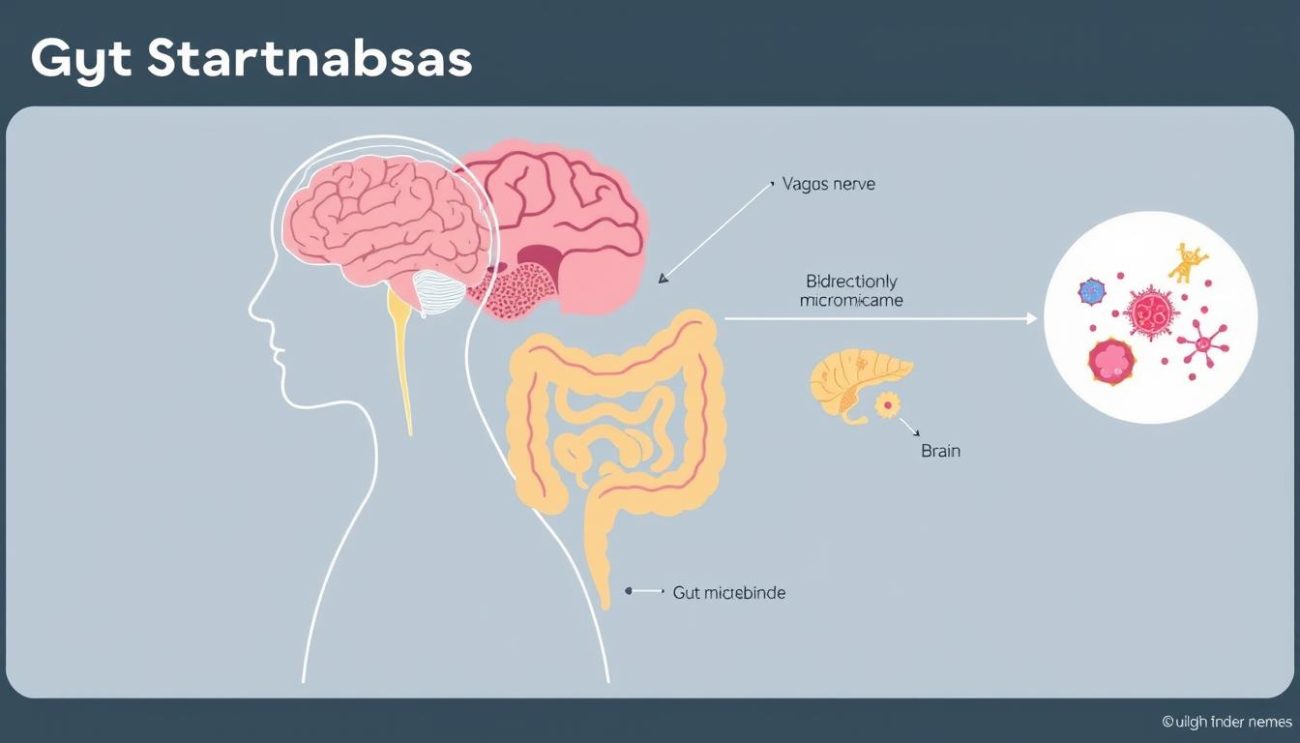
The gut-brain axis: A bidirectional communication network linking your enteric and central nervous systems
The gut-brain axis is a sophisticated bidirectional communication network that links your enteric nervous system (the one governing your digestive tract) with your central nervous system (your brain and spinal cord). This connection isn’t just a simple pathway—it’s an intricate system involving neural, endocrine, immune, and metabolic routes that allow constant information exchange between these two vital systems.
Recent Scientific Discoveries (2022-2023)
These discoveries highlight just how intimately connected your digestive system is to your emotional well-being. Think of your gut as not just a food processing center, but as a sophisticated chemical factory that produces compounds directly influencing how you feel and think.
How Your Gut Microbiome Influences Neurotransmitter Production
Gut bacteria produce and influence key neurotransmitters that regulate mood and emotional states
One of the most remarkable aspects of the gut-brain connection is how your intestinal microbiome directly influences the production of neurotransmitters—the chemical messengers that regulate your mood, cognition, and emotional responses.
Serotonin: The Happiness Hormone
Did you know that approximately 95% of your body’s serotonin—often called the “happiness hormone”—is produced in your gut, not your brain? This neurotransmitter plays a crucial role in regulating mood, sleep, appetite, and even pain perception. Specific gut bacteria influence enterochromaffin cells in your intestinal lining to produce serotonin, which then affects both local gut function and, through various pathways, brain activity.
Dopamine: The Reward Chemical
Your gut microbiome also influences the production of dopamine, the neurotransmitter associated with pleasure, motivation, and reward. Certain beneficial bacteria can produce dopamine directly or stimulate cells in your gut lining to increase its production. This gut-derived dopamine affects not only local digestive functions but can also impact brain dopamine levels, influencing your mood and motivation.
GABA: The Calming Agent
Gamma-aminobutyric acid (GABA) is an inhibitory neurotransmitter that helps calm nervous system activity. Research has shown that specific probiotic bacteria, particularly certain strains of Lactobacillus and Bifidobacterium, can produce GABA directly in the gut. This gut-derived GABA may help reduce anxiety and stress responses throughout your body.
“When most people think about mental health, they only think about the brain, but there is bi-directional communication between the gut and brain. I tell people the gut and the brain are like BFFs. The brain and the gut are in constant communication with each other.”
– Dr. Arpana “Annie” Gupta, co-director of the Goodman-Luskin Microbiome Center at UCLA
This intricate relationship explains why digestive issues often coincide with mood disorders, and why improving gut health can have such profound effects on emotional well-being. Your microbiome isn’t just affecting digestion—it’s actively participating in the chemical conversations that shape how you feel each day.
5 Dietary Recommendations to Improve Gut Health for Better Mood
Incorporating diverse, nutrient-rich foods supports a healthy gut microbiome and improved mood regulation
What you eat directly influences your gut microbiome composition, which in turn affects your mood and emotional well-being. Here are five evidence-based dietary recommendations to optimize your gut health for better emotional balance:
1. Increase Dietary Fiber Intake
Fiber acts as fuel for beneficial gut bacteria, helping them thrive and produce beneficial compounds like short-chain fatty acids that reduce inflammation and support brain health. Aim for 25-30 grams of fiber daily from diverse sources.
2. Incorporate Fermented Foods Daily
Fermented foods contain live beneficial bacteria that can colonize your gut and improve microbiome diversity. These foods have been linked to reduced inflammation and improved mood regulation.
3. Consume Omega-3 Fatty Acids
Omega-3s reduce gut inflammation and improve the integrity of the intestinal barrier, preventing “leaky gut” that can contribute to mood disorders. They also directly support brain health and neurotransmitter function.
4. Reduce Ultra-Processed Foods and Added Sugars
Highly processed foods and added sugars promote the growth of inflammatory gut bacteria while reducing beneficial species. This shift can increase intestinal permeability and systemic inflammation that affects brain function.
5. Eat a Diverse Range of Plant Foods
Microbiome diversity is strongly linked to better mental health outcomes. Each different plant food you consume supports unique bacterial species in your gut ecosystem.
Ready to Transform Your Gut Health and Mood?
Get our comprehensive guide with meal plans, recipes, and shopping lists designed to optimize your gut microbiome for better emotional well-being.
The Role of Probiotics and Prebiotics in Mental Wellness
Probiotics introduce beneficial bacteria while prebiotics provide the fiber that helps them thrive
Probiotics and prebiotics have emerged as powerful tools for supporting both gut health and mental wellness. Understanding how to effectively incorporate them into your routine can significantly impact your mood regulation.
Probiotics: Living Beneficial Bacteria
Probiotics are live beneficial microorganisms that, when consumed in adequate amounts, confer health benefits. In the context of mental health, specific strains have been identified as “psychobiotics” due to their ability to produce or influence neurotransmitters and reduce inflammation.
| Probiotic Strain | Mental Health Benefits | Food Sources | Research Evidence |
| Lactobacillus acidophilus | Reduces anxiety and depression symptoms | Yogurt, kefir, some cheeses | 8-week trial showed 40% reduction in depression scores |
| Bifidobacterium longum | Decreases stress response and improves cognitive function | Some yogurts, fermented foods | Reduced cortisol levels and improved memory in human trials |
| Lactobacillus rhamnosus | Reduces anxiety and stress-related behaviors | Some fermented dairy products | Shown to increase GABA production in the gut |
| Lactobacillus helveticus | Improves mood and reduces psychological distress | Certain cheeses and fermented milk | Clinical trials show reduced anxiety and depression symptoms |
Prebiotics: Food for Your Beneficial Bacteria
Prebiotics are specialized plant fibers that act as food for the beneficial bacteria in your gut. By selectively feeding helpful microbes, prebiotics help create an environment where these mood-supporting bacteria can thrive.
Synbiotics: The Power of Combination
Synbiotics combine probiotics and prebiotics for a synergistic effect. This approach ensures that you’re not only introducing beneficial bacteria but also providing the ideal environment for them to flourish.
Practical Tip: For maximum benefit, try combining probiotic-rich foods with prebiotic foods in the same meal. For example, add banana and flaxseeds (prebiotics) to yogurt (probiotic), or serve sauerkraut (probiotic) alongside a salad with garlic and onions (prebiotics).
While probiotic supplements can be beneficial, research increasingly suggests that obtaining probiotics from food sources may provide additional benefits due to the synergistic effects of other nutrients present in these foods. If you do choose supplements, look for products with multiple strains and at least 1 billion CFUs (colony-forming units) per serving.
Common Mood Disorders Linked to Poor Gut Health
Gut dysbiosis can contribute to various mood disorders through inflammation, neurotransmitter imbalances, and HPA axis dysregulation
Emerging research has established strong connections between gut health disruptions and several common mood disorders. Understanding these links can help explain why addressing gut health may be a crucial component of mental health treatment.
Depression and the Gut Microbiome
Multiple studies have found distinct differences in the gut microbiome composition of individuals with depression compared to healthy controls. People with depression typically show reduced microbial diversity and an overabundance of inflammatory bacterial species.
Anxiety Disorders and Intestinal Permeability
“Leaky gut syndrome”—where the intestinal barrier becomes more permeable—allows bacterial toxins like lipopolysaccharide (LPS) to enter circulation. These compounds trigger systemic inflammation that can reach the brain and disrupt mood regulation.
Stress Response and HPA Axis Regulation
The gut microbiome plays a crucial role in regulating the hypothalamic-pituitary-adrenal (HPA) axis, which controls your body’s stress response. Dysbiosis can lead to an exaggerated stress response and difficulty returning to baseline after stressful events.
Bipolar Disorder and Gut Inflammation
Recent research has identified connections between bipolar disorder and gut microbiome disruptions, particularly involving increased intestinal inflammation and altered short-chain fatty acid production.
“When we think of mental health, we have to think about our gut as well. If you have an unhealthy gut microbiome, chances are you will have an unhealthy brain. If your microbiome is healthy, your brain is going to be healthy.”
– Dr. Arpana Gupta, UCLA Goodman-Luskin Microbiome Center
These connections highlight why an integrative approach to mental health—one that addresses gut health alongside traditional treatments—may offer better outcomes for many individuals struggling with mood disorders.
Gut-Friendly Mood Booster Checklist
Implementing these seven strategies can significantly improve your gut-brain connection and emotional well-being
Ready to take action? Use this practical checklist to improve your gut health and boost your mood. Try to incorporate as many of these strategies as possible into your daily routine.
Download Your Printable Gut-Friendly Mood Booster Checklist
Get our expanded checklist with tracking tools, meal ideas, and additional resources to help you implement these strategies consistently.
Your Gut as a Second Brain: Understanding the Enteric Nervous System
The enteric nervous system contains over 500 million neurons and can operate independently of the central nervous system
When scientists refer to your gut as a “second brain,” they’re not speaking metaphorically. Your enteric nervous system (ENS) is a complex network of more than 500 million neurons embedded in the lining of your gastrointestinal tract—more than in your spinal cord!
The Remarkable Capabilities of Your Gut Brain
Your enteric nervous system can operate independently of your central nervous system, making decisions and controlling digestive functions without input from your brain. This autonomous network:
The Vagus Nerve: Your Gut-Brain Superhighway
The vagus nerve serves as the primary communication channel between your gut and brain, transmitting information in both directions. This cranial nerve:
Interesting Fact: Your gut produces and uses more than 30 neurotransmitters, including 95% of your body’s serotonin and about 50% of your dopamine. These neurotransmitters affect not only local gut function but can also influence brain activity and mood regulation.
Understanding your gut as a legitimate “second brain” helps explain why digestive issues so often coincide with mood disorders, and why addressing gut health can have profound effects on mental well-being. This isn’t just about feeling better digestively—it’s about creating the optimal environment for your enteric nervous system to support positive emotional states.
Authoritative Research Sources
Recent scientific research has established strong evidence for the gut-brain connection
The information in this article is supported by research from leading scientific institutions. Here are three authoritative sources for further reading:
1. Harvard Medical School - The Gut-Brain Connection
Harvard Health Publishing provides an in-depth exploration of how the gut and brain communicate and how this connection affects both physical and mental health. Their research highlights the role of the microbiome in mood regulation and mental health disorders.
Key finding: “A troubled intestine can send signals to the brain, just as a troubled brain can send signals to the gut. Therefore, a person’s stomach or intestinal distress can be the cause or the product of anxiety, stress, or depression.”
2. Nature Journal - The Microbiome-Gut-Brain Axis
Nature, one of the world’s leading scientific journals, has published extensive research on the microbiome-gut-brain axis. Their studies examine the molecular and biochemical mechanisms by which gut bacteria influence brain function and behavior.
Key finding: “Microbiota can influence the brain via various routes of communication, including the vagus nerve, the immune system, and metabolites such as short-chain fatty acids, which are produced by gut bacteria and can enter the bloodstream.”
3. UCLA Goodman-Luskin Microbiome Center
The UCLA Goodman-Luskin Microbiome Center conducts cutting-edge research on the gut-brain axis and its implications for mental health. Their work includes clinical trials examining how dietary interventions affect microbiome composition and mental health outcomes.
Key finding: “When somebody’s diet is rich with things like antioxidants, phytonutrients and fiber, we know that person is going to get a variety of different vitamins and minerals that support anti-inflammatory properties of the body. Those properties are then going to beneficially alter the neurotransmitters, which in turn affects mood and cognition.”
Conclusion: Nurturing Your Gut for Emotional Well-Being
Prioritizing gut health through diet and lifestyle choices can lead to significant improvements in mood and emotional resilience
The connection between gut health and mood represents one of the most exciting frontiers in our understanding of mental wellness. The bidirectional communication between your gut and brain influences everything from your daily mood fluctuations to your long-term emotional resilience.
By implementing the strategies outlined in this article—increasing dietary fiber, incorporating fermented foods, consuming omega-3 fatty acids, reducing ultra-processed foods, and eating a diverse range of plant foods—you can cultivate a gut environment that supports optimal neurotransmitter production and reduces inflammation that can disrupt mood regulation.
Remember that your gut is truly a “second brain,” containing hundreds of millions of neurons and producing the majority of your body’s serotonin and other mood-regulating neurotransmitters. By treating it with the same care and attention you would give your brain, you’re investing in your emotional well-being from the inside out.
Whether you’re dealing with occasional mood fluctuations or more persistent emotional challenges, understanding and optimizing the gut-brain connection offers a powerful, natural approach to supporting your mental health. Start with small, consistent changes, and pay attention to how your body—and mind—respond.
Take the Next Step in Your Gut-Brain Health Journey
Download our comprehensive guide with meal plans, recipes, shopping lists, and tracking tools to help you implement these strategies consistently and effectively.